The moon is moving away from the earth, one day will be 25 hours

As the Moon slowly recedes, the Earth's rotation is slowing down due to gravitational effects

Published: 07:53 10 September 2024
24 hours are counted as one day on the clock. But new research shows that the Earth's rotation is slowing down due to gravitational effects as the Moon slowly recedes. As a result, the Earth's day time is gradually increasing. This rate of increase in time of day is not generally understood as it is a fraction of a second.
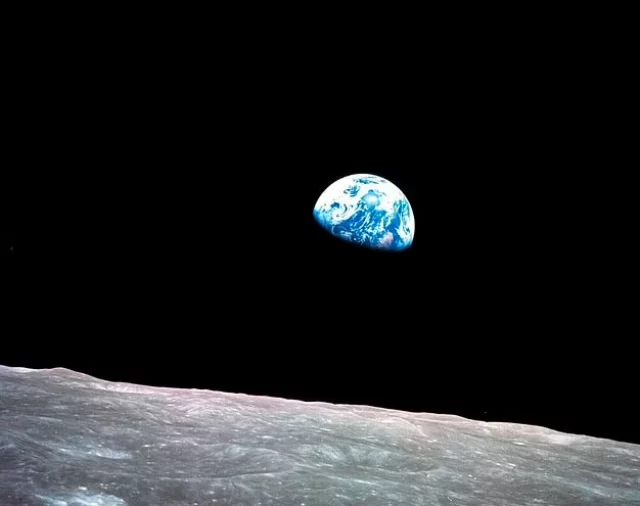
Researchers from the University of Wisconsin-Madison in the United States once again reported that the distance of the Moon from the Earth is increasing and if it increases in this way, the length of the day on Earth will increase. However, it is not a few minutes, but a full 1 hour, i.e. the length of 1 day will increase from 24 hours to 25 hours. Although that long day will have to wait about 20 million years.
Recently, the information of this new study was reported by the Daily Mail. Researchers said that the Earth's rotation speed is decreasing due to gravitational effects as the Moon is slowly moving away. As a result, the Earth's day time is gradually increasing. This rate of increase in time of day is not generally understood as it is a fraction of a second. In this way, if the moon gradually moves away, the days on Earth may be as long as 25 hours in the future.
Stephen Meyers, a scientist at the University of Wisconsin-Madison in the United States, said, 'The moon is moving away about 3.8 centimeters every year. Which means, it takes more time for the moon to go around our planet. As the moon is moving away, the rotation of the earth is also decreasing. There will come a time when the moon will reach a stable distance. Then the moon will be seen only from one side of our planet.
Researchers say that the current distance from the Earth to the Moon is 384,400 kilometers. Now the Moon is moving away from the Earth at a rate of about 3.8 cm per year. This passing away of the moon can bring about big changes on Earth.
According to scientists, 1.4 billion years ago, there was a day in 18 hours on Earth due to the close proximity of the moon. The Earth's rotation is slowing down as the Moon slowly recedes. As the Moon orbits the Earth, its gravity exerts a pull on the ocean water, which in part slows the Earth's rotation. Earth's inertia is stronger than Moon's gravity. Tides are created by the pull of the Earth and the Moon. Again, the Earth rotates on its axis much faster than the Moon's orbit. Due to these reasons the world is slowing down.
Advertisement
Most Readed - Information technology

- Bangladesh Thrash Sri Lanka 4-0 to Top Group A and Reach SAFF Championship Semi-Finals
- India Introduces Major Visa Reforms, Replaces Tourist Visa with ‘Visitor Visa’
- Four Home Ministry and Police Officials to Visit the Netherlands for Dog Selection
- Rashed Khan’s remarks on Amir Hamza: Calling for the death penalty by stoning
- Ziaul Hoque Polash Shares an Emotional Message
- Bangladesh to Face Pakistan in U-19 Asia Cup Semifinals
- World Leaders to Speak at COP-31; Key Figures Absent
- Rohingyas in Bangladesh Exceeds 1.5 Million; Economic Strain Intensifies
- Kareena Kapoor Khan is firmly against using injections to maintain her beauty—here’s why!
- Bangladesh to Play a Test Against Ireland Before England Tour
- Bangladesh Inspires India's Gen Z Movement: Student Leader Neha Bora
- Nearly Half of Households in the Country Are in Debt; Expenses Exceed Income: BBS Survey
- How many times has Pori Moni been married, and who were her husbands? Find out the details.
- Salman Khan Reveals Desire to Become a Father at 60
- Collaborators of fascism are living a lavish life abroad after looting the country's wealth: Rizvi
- Digital Forensic Labs to be Set Up in Eight Divisions: Home Minister
- LPG Traders Call Off Two-Day Strike; Shops to Remain Open
- Bangladesh Women's Cricket Team Swept 3-0 by Australia
- Electricity from Rooppur to Join National Grid in November; Second Unit Targeted for June
- Series of Drone Attacks in War-Torn Sudan Leave Over 160 Dead