Competing Alliances and Youth Vote Set to Shape Bangladesh’s 13th National Election: Reuters


Published: 01:56 9 February 2026
Bangladesh’s political landscape has undergone a dramatic transformation ahead of the 13th national parliamentary election and the accompanying constitutional referendum. After years of elections marked by limited competition, many observers—particularly young voters who took part in the 2024 protest movement—believe the upcoming vote could be the country’s first genuinely competitive election since 2009, according to a report by Reuters.
The shift in political dynamics follows the removal of former Prime Minister Sheikh Hasina from power, after which her Awami League was barred from participating in the election. In contrast, the Bangladesh Nationalist Party (BNP) has returned to the electoral arena with full force, contesting 292 of the 300 parliamentary seats. BNP chairperson Tarique Rahman has expressed confidence that his party will secure a parliamentary majority and form the next government.
However, the BNP faces strong competition from an Islamist alliance led by Jamaat-e-Islami. The alliance has gained additional momentum through cooperation with a youth-driven political group representing Generation Z voters, commonly referred to as the National Citizen Party (NCP). Political analysts suggest that the voting behavior of younger citizens could play a decisive role in determining the election outcome.
According to governance expert Parvez Karim Abbasi of the Centre for Governance Studies in Dhaka, opinion polls indicate that the BNP currently holds an advantage, though a substantial portion of voters remain undecided. “The final result may depend on where undecided and young voters place their support,” he noted, adding that the election will have far-reaching consequences for both political stability and economic recovery.
Campaign visuals across the country reflect the changing political climate. Streets that once prominently displayed the Awami League’s boat symbol are now lined with BNP’s sheaf-of-paddy posters and Jamaat’s balance-scale emblem. Party offices are active, campaign songs are playing, and election discussions have become a regular feature of daily life—marking a clear departure from previous election cycles.
Analysts also point out that Jamaat-e-Islami’s growing appeal is not primarily rooted in religious ideology. Instead, many voters appear to be responding to the party’s image of organizational discipline and comparatively low corruption. Surveys cited in the Reuters report suggest that voters are prioritizing economic performance, anti-corruption measures, and job creation over symbolic or religious considerations.
Young voters, particularly first-time participants, have high expectations. Twenty-one-year-old voter Mohammad Rakib told Reuters that previous elections made it difficult to express political opinions freely. “We hope the next government will protect our right to vote and speak without fear,” he said, reflecting a sentiment widely shared among younger citizens.
The election also carries significant geopolitical implications. Since Sheikh Hasina’s departure, India’s influence in Bangladesh has weakened while China’s presence has expanded. Observers believe a BNP-led government may pursue a more balanced relationship with India, whereas a Jamaat-influenced administration could strengthen ties with Pakistan—though Jamaat leaders deny favoring any specific foreign power.
Economic challenges further heighten the stakes. High inflation, declining foreign currency reserves, and reduced investment have placed increasing pressure on the economy, prompting Bangladesh to seek substantial external financing since 2022. Experts argue that only a stable and credible post-election government can restore investor confidence and guide the country toward sustainable growth.
Taken together, political competition, economic urgency, youth participation, and international positioning have made the upcoming election a critical turning point for Bangladesh. Analysts emphasize that forming a stable and inclusive government after the vote will be essential to ensuring long-term national stability and democratic credibility.
Advertisement

Most Readed - Politics


- Job opportunities at Transcom Group, 2 days off per week
- Income tax return proof will also be required for UP chairman elections
- Messi praises Brazil legend Ronaldo despite hat-trick
- 'Joy Bangla, Joy Bangabandhu' slogans at Prime Minister's event venue; youth detained
- Rescued from Cambodian cyber fraud ring, 221 Bangladeshis return home in four days
- Messi storms with hat-trick, Argentina starts World Cup mission with victory
- Why does Messi play so well?' - Bubli's candid confession on magical performance in the World Cup
- Trump's comments spark new controversy: 'It would have been difficult for Israel to survive without US support'
- Dhaka North City Corporation to recruit 178 posts, applications start on June 18
- Police convoy attacked after child's body recovered, OC and 30 injured
- Ramisa murder case trial begins, accused makes new demands in court
- Norwegian newspaper's 'snake-wearing' Modi cartoon sparks international controversy
- Martinez did not stop even with a broken finger, the 'undefeated king' of the final made new history
- 118 children raped in 5 months in the country
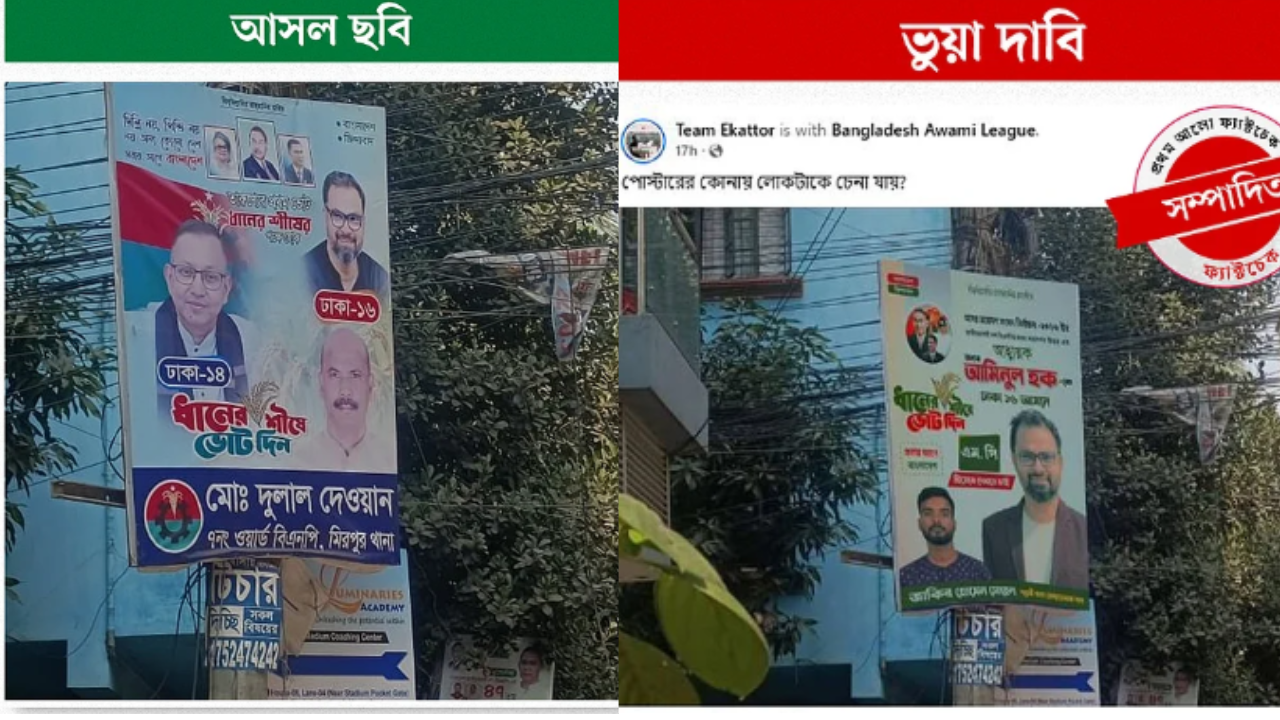
- Controversy over the accused's photo in Aminul Haque's election festoon
- Bangladesh makes history by whitewashing Pakistan
- Russia launches deadly missile and drone strikes on Kiev
- Prime Minister announces end to corruption and harassment in land services
- 6-month-old child kidnapped over interest money dispute, rescued after 48 hours in RAB-police operation
- BNP leader arrested in dowry case in jail