What was East Africa like 4 million years ago, what did the inhabitants eat, how did they live? Surprising information found in tooth fossils

Published: 01:44 23 April 2026
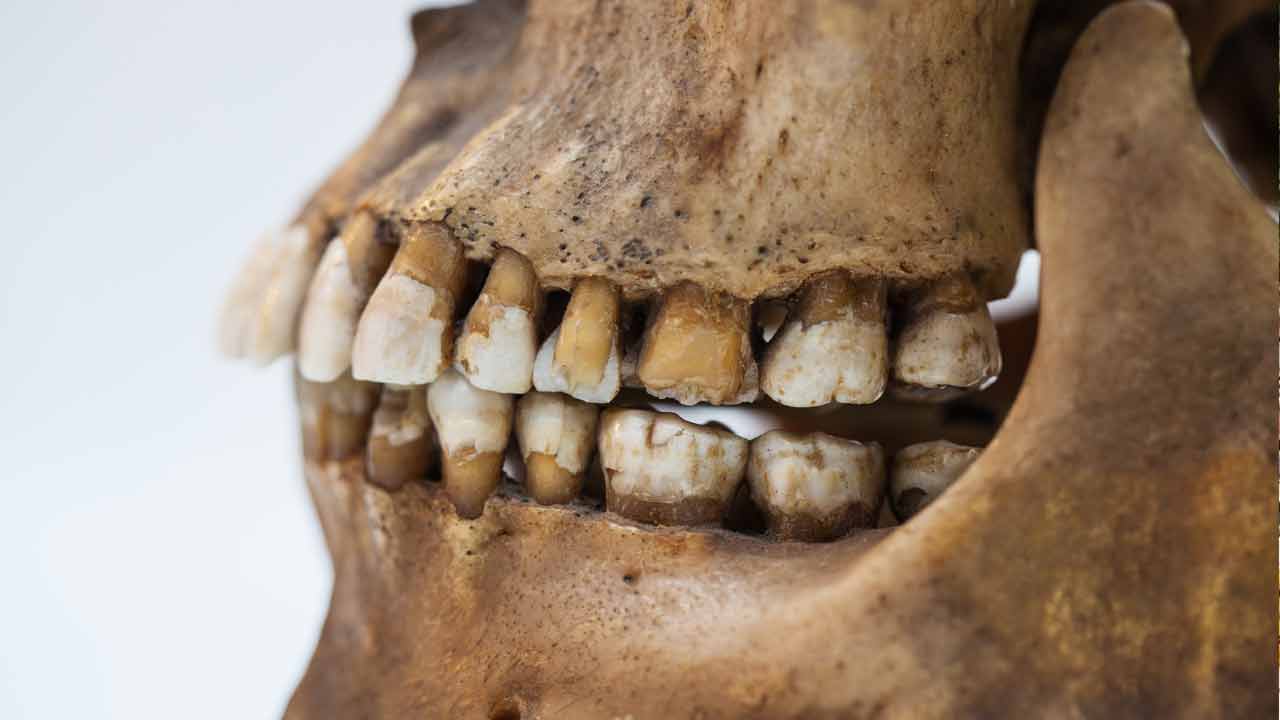
The Afar region of East Africa was not as dry as it is today, but rather full of dense forests, rivers and lakes - such sensational information has emerged from the analysis of ancient tooth fossils. Scientists say that important evidence of the environment, fauna and lifestyle of primitive people millions of years ago is hidden in tooth enamel.
The study was led by Professor Zelalem Bedaso of the University of Dayton in the United States. After examining the tooth fossils recovered from the Afar region of Ethiopia, they found that this region was completely different about 4 million years ago.
Scientists explained that even though human bones decay over time, tooth enamel remains almost unchanged. As a result, analyzing the chemical elements deposited in that enamel can help us understand what ancient animals ate and what kind of environment they lived in.
This study found that the Afar region at that time had vast forests, grasslands, rivers and lakes. Animals like giraffes, elephants, hippos, horses and antelopes roamed there. Some ate leaves, some ate grass - and the imprint of that diet is clearly visible on their teeth.
About 2 to 3 million years ago, the environment of this region gradually began to change. The forests decreased and grasslands and savannas took their place. As a result, the structure of the animals' bodies and teeth changed. Some animals developed strong teeth especially suitable for eating grass.
Similarly, information about the lifestyle of the primitive human species Australopithecus afarensis was also found in the analysis of their teeth. The study showed that they mainly lived by eating fruits and leaves. Grass was not very much in their diet.
According to scientists, along with the change in the environment, eating habits and lifestyle also changed. By analyzing this detailed information from the teeth, it is possible to understand the important stages of human evolution in a new way.
This research proves that dental fossils are an invaluable source of information for understanding the history of the Earth millions of years ago, bringing to the fore the lost world of the past.
Advertisement
- David Emon’s associate ‘Daba Harun’ arrested.
- The government aims to attract an additional $5 billion in investment from the United States.
- Kavish returns to Dhaka after 10 months, accompanied by Shironamhin and Meghdol.
- Those who spread hatred in society in the name of Islam deserve to be branded the ultimate 'Masood'
- India vs. Sri Lanka title clash tonight; check out today's match schedule.
- India Hosts Vegetarian Feast for World Leaders on Day One of BRICS Summit
- Control Room Launched to Oversee Fertilizer Supply and Distribution
- Risk of storms in coastal areas due to low-pressure system; Warning Signal No. 3 for four seaports
- No Relief in Fish, Chicken and Egg Prices, Low-Income People Under Pressure
- "Investigation would reveal evidence of corruption against every student advisor": Nur
- 15 artists including Boga Taleb to sing in memory of Razzak Dewan
- Joining the Mecca Pact is Bangladesh's own matter: Jamaat Ameer
- Young man leaves weapon at opponent's house, calls police, hangs himself
- 600 students leave hostel in India over 'ghost scare', doctors have different explanations
- Is it possible to determine gender with a testosterone test? Find out what science says
- Prime Minister Tarique Rahman to visit India from August 20-25
- Iran is losing control of the Strait of Hormuz
- Emraan Hashmi is coming back with 'Jannat', 'Jannat 3' is coming
- Bangladesh dream of victory against Australia, Tigers continue dominance in Darwin Test
- NBR to be split into two independent institutions: Finance Minister